
On 1 April, Sparkup Tartu Science Park and the Estonian University of Life Sciences signed a Letter of Intent to support the activities of the European Space Agency Business Incubation Centre (ESA BIC) in Tartu for the period 2026–2030.
Under the agreement, the Estonian University of Life Sciences will participate as a technical partner in the ESA BIC Estonia, providing a wide range of technical support to start-ups participating in the incubation programme. The university’s contribution includes expert consultation as well as access to research and development infrastructure.
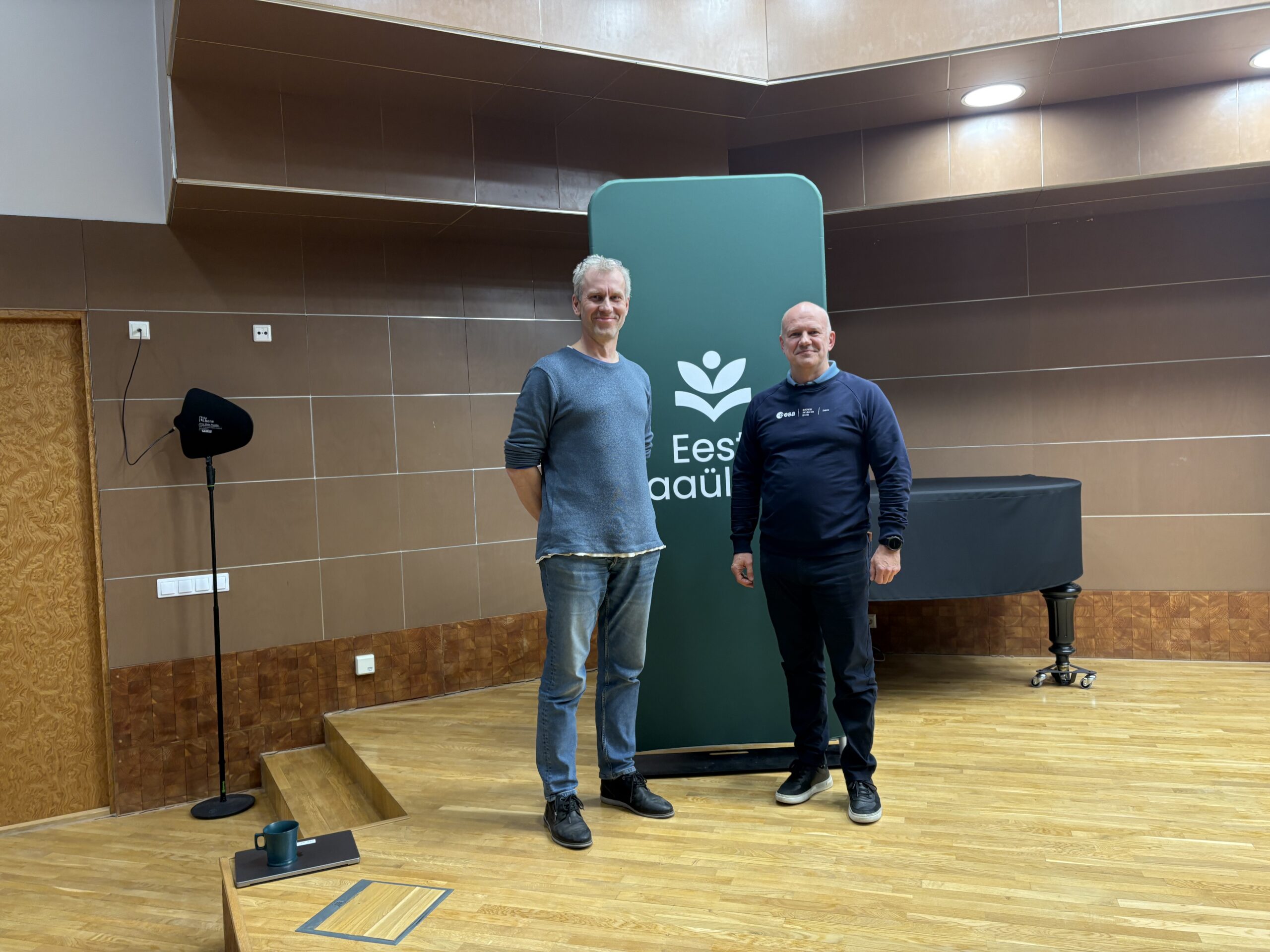
Kalle Olli, Vice-Rector for Research at the Estonian University of Life Sciences, said that the university is pleased to share its knowledge with the European Space Agency and support the development of space-related innovation and entrepreneurship. “We can offer, among other things, hardware development, prototyping and rapid prototyping facilities, equipment loans, software architecture design, software tools, testing facilities, and links to the manufacturing industry,” he said, adding with a forward-looking note that the time may come when potatoes will be grown on Mars.
Andrus Kurvits, Member of the Management Board at Sparkup Tartu Science Park, added that the inclusion of the Estonian University of Life Sciences in the incubator consortium is particularly significant due to the university’s strong competence in remote sensing. “The space industry is no longer exclusive and has shown strong growth in funding in recent years. It is even one of the most successful sectors,” Kurvits noted. At the signing, he paraphrased a well-known quote: “This agreement is a small step for the Estonian University of Life Sciences, but a big step for Tartu Science Park,” expressing enthusiasm for the growing cooperation.
Researchers and students at the Estonian University of Life Sciences use and analyse European Space Agency satellite data in their studies and research to advance remote sensing, including the assessment of forest resources, health, and biodiversity. Satellite data also supports precision agriculture and water monitoring, and is indispensable for modern geodesy and spatial data acquisition.
The Estonian University of Life Sciences will provide each start-up in the incubator with up to 20 hours of technical consultation from experts in various fields and enable access to university facilities and equipment at no additional cost. A database of technical experts and available infrastructure will also be established. A tailored technical support plan will be agreed individually with each start-up prior to the incubation period, taking into account the company’s needs and development stage.
ESA BIC Estonia, led by Sparkup Tartu Science Park in cooperation with Tehnopol, is part of the European Space Agency’s network of business incubation centres. The incubator supports innovative Estonian start-ups in bringing space technologies to new markets by offering up to €60,000 in product development support, specialised mentoring, access to an international network, and business development loans. Approximately 10 teams participate in the programme each year. The current application round is open until 1 May 2026.
More information and application details: HERE.