
Blue Team Intelligence was founded in 2021 and supports government agencies in intelligence management and analysis, with a strong focus on geospatial solutions. The team combines academic expertise in geospatial data with operational experience from intelligence roles within the military and police, offering tooling, training, and on-site support.
Since early 2025, the company has expanded into developing terrain analysis products for military planning and situational awareness, using satellite data and AI. Their first product, Soil Trafficability Insights, was submitted to the 2026 NATO DIANA accelerator programme.
In 2026, Blue Team Intelligence partnered with another company to establish a new entity, Pavolytics, focused on developing and delivering terrain analysis products. The goal is to build a suite of terrain insight solutions that will lead to automated terrain analysis. Pavolytics has five shareholders, with Bas Ooink and Matthijs Plat as founders. Bas holds a master’s degree in Human Geography and has 14 years of experience as an intelligence officer in the Dutch Army and police, bringing deep technical knowledge and user understanding. Matthijs holds a master’s degree in Technology, Policy and Management and has founded multiple vision AI companies, contributing strong business and sales expertise.
We spoke with Bas Ooink and Matthijs Plat, founders of Blue Team Intelligence and Pavolytics, to get to know the company more.
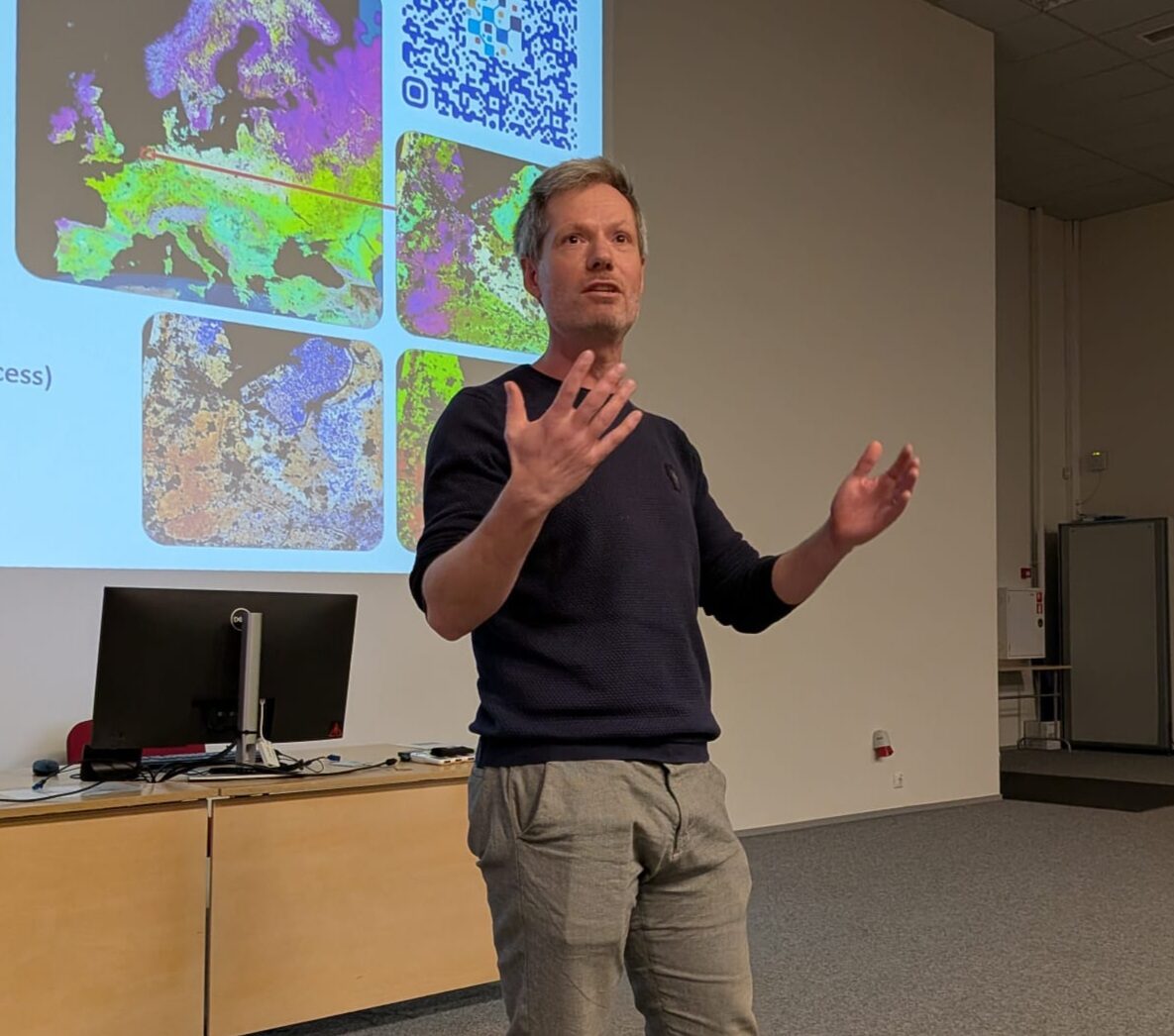
On the left: Bas Ooink
How did you come up with the idea to create a startup?
During his career as an intelligence officer, Bas conducted geospatial intelligence analysis for military commanders during deployments. He saw that, with ongoing technological developments, there were many new possibilities to explore — but doing so from within the military organisation was difficult. This led to the decision to start a company that could support government agencies from outside and bring these capabilities into practice.
What differentiates Blue Team Intelligence from other companies?
We combine strong technical and academic expertise with real operational experience. This means we deeply understand what our customers actually need and can translate that directly into products that deliver practical, actionable insights.
What have been the biggest challenges or the biggest wins so far?
One of the biggest challenges has been developing a niche solution that is clearly needed by end-users, while also convincing defence innovation and procurement departments. In many cases, this means addressing problems that non-operational stakeholders are not yet fully aware of.
At the same time, this has also led to our biggest win. We have identified a strong need from end-users and larger defence contractors to integrate our solution into their capabilities. Our clear understanding of real-world use cases has helped generate early traction and validate the relevance of what we are building.
Why did Blue Team Intelligence apply to the NATO DIANA accelerator?
While we have a military background, we have limited experience in selling to and working with military customers and prime contractors. The NATO DIANA Accelerator helps us bridge that gap. Another key advantage is the structured roadmap and timeline, which keep development moving at a fast pace while providing the right support along the way.
Where do you see your startup in 12 months and in 5 years?
In one year, we aim to have our Soil Trafficability Insights product validated and tested in real-world conditions, with our first contracts secured with military customers and prime contractors. In five years, we plan to have fully developed an automated terrain analysis pipeline that can be integrated into a wide range of decision-making platforms.
Who will be the next defence or dual-use unicorn?
Of course, I’d like to say us. Still, through DIANA, I’ve learned that the strongest defence startups are often those offering something niche and unique that can be integrated into larger systems, especially solutions that primes are not able or willing to build themselves. I see that same pattern in our cohort, where each company brings something complementary to the table.
If I had to highlight one, I recently came across a Dutch startup called DoRoad. They’ve developed an AI-powered tool that assesses threats along travel routes by building scenarios based on incidents. It has evolved into a NATO-standard decision support tool that significantly speeds up the MDMP process. It’s a real game-changer for military decision-making, very impressive, and potentially a great fit for the programme in 2027.
Which experts or influencers in your field do you follow and would recommend to other aspiring entrepreneurs?
Military organisations often find it challenging to change quickly. With rapid technological developments, companies tend to offer solutions that aim to replace existing workflows and procedures entirely – which can be a step too far for end-users. In reality, transformation in the military happens more gradually. That’s why it’s important to follow military influencers with real field experience. They may not always have the most cutting-edge ideas, but their perspectives are grounded in reality – and therefore much more applicable in practice.
The NATO DIANA Estonian accelerator is implemented by Tehnopol Startup Incubator together with Sparkup Tartu Science Park.