
Conflicts today don’t just happen on the battlefield – they start in how people think, talk, and form opinions. Understanding how information spreads and influences behaviour is becoming increasingly important.
That’s where CulturePulse comes in, combining AI and behavioural science to understand better and predict how narratives shape societies.
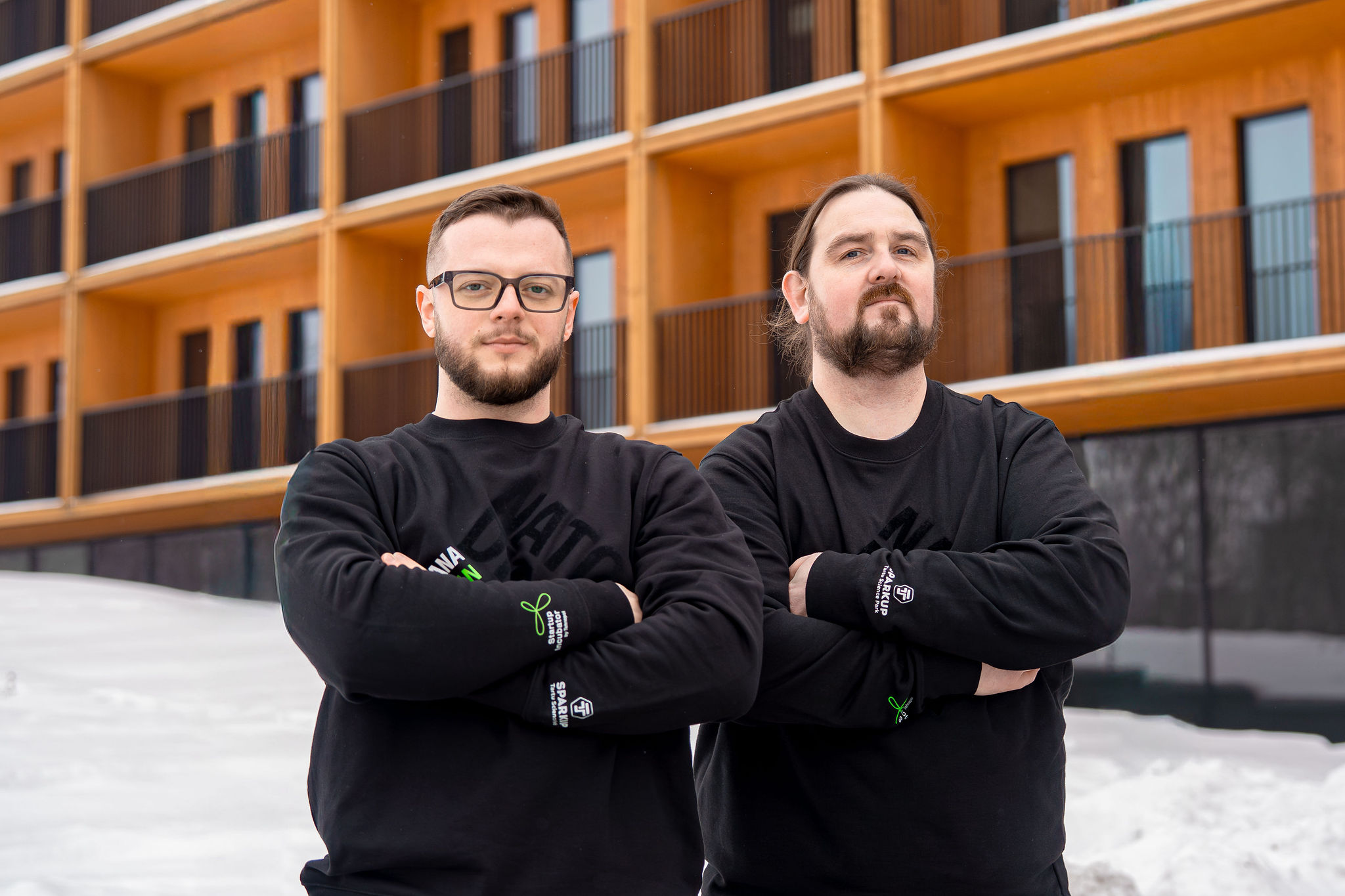
We spoke with Michael Gantley, Executive Vice President, and Jakub Šuster, Vice President for Strategy and Expansion, about where the idea came from, the challenges of turning complex AI into practical tools, and why the NATO DIANA Estonian accelerator is an important step in their journey.
Who is behind CulturePulse?
CulturePulse builds AI technology that profiles groups and models how narratives spread across societies to understand and predict how information influences behaviour. The company was co-founded by Dr. Justin E. Lane (CEO), a computational social scientist from Oxford with a decade of experience developing AI systems for social cohesion, risk, and influence analysis, and Dr. F. LeRon Shults (Chief Research Officer), a leading expert in social simulation and AI with over 200 publications and multiple academic appointments. The leadership team also includes Dr. Michael (Mick) Gantley (EVP), an Oxford-trained computational social scientist who leads product development, translating advanced AI and behavioural modelling into operational tools for defence and government users.
How was the startup idea born?
We started by noticing something critical. Modern conflicts don’t just happen on battlefields anymore. They happen in the information space first. Whoever can shape how people think about an issue often wins the narrative war. We looked at what tools already existed and found they were mostly watching what content was out there. But nobody was really answering the harder question: how do stories actually spread from person to person, and what makes people actually believe and act on them? That’s where CulturePulse came in. We built something that models how humans actually think and make decisions – not just tracking narratives, but understanding how people absorb them, share them, and ultimately act on them. And we do this at scale, simulating millions of realistic human agents so that you can see the ripple effects across entire populations. It’s the difference between knowing a story exists and understanding why it sticks with people.
What has been the biggest challenge so far?
One of our toughest challenges has been bridging the gap between powerful AI technology and something defence and government teams can actually use in their daily work. That journey from “impressive capability” to “operational tool” is longer and more complex than most people expect. On the wins side, the validation speaks for itself. We’ve had strong results in UK government evaluations and been accepted into NATO DIANA, which tells us we’re building something the defence community genuinely needs.
What differentiates CulturePulse from other solutions?
Most tools out there monitor content or track sentiment. We do something fundamentally different. CulturePulse models how humans actually think, learn, and forget, powered by our proprietary Cognitive Architecture. This lets us build psychologically realistic agents quickly and at scale, from individual profiles all the way up to populations of millions. That means we can forecast and predict human behaviour at both the individual and group level, not just describe what has already happened. In our work with NATO DIANA, we focus on profiling groups and networks to understand how narratives spread and shape behaviour across complex systems. The result is a system-level view of influence dynamics, giving decision-makers predictive insight into how information environments evolve and how populations are likely to respond.
Why apply to the NATO DIANA accelerator?
We chose NATO DIANA because it gives us direct access to defence users, real test environments, and clear paths to adoption. Exactly what we need to validate and scale our dual-use technology. It also aligns closely with our mission: helping NATO understand and operate effectively in the information battlespace.
Where do you see the company in 12 months and in five years?
In one year, we want to prove that our technology works in the real world. That means running pilots with defence users, gathering feedback, and showing measurable results in how we help analysts understand influence operations and support better decisions. In five years, we want to be a trusted, go-to capability for NATO and allied organisations when it comes to understanding the information environment and building resilience against cognitive warfare. Not a nice-to-have, but a core part of how they operate.
Who will be the next defence or dual-use unicorn?
Honestly, watching the NATO DIANA cohorts, several companies coming through the program have serious unicorn potential, and the smart money is already paying attention. The next breakout might be European, drone or AI-enabled, and battle-tested in Ukraine. Companies like Quantum Systems and ARX Robotics are building fast in the right lanes.
Which book or sources would you recommend to other startup founders?
The team follows a mix of AI, defence, and behavioural science sources. In AI and technology, we find the work of people like Andrej Karpathy and publications such as MIT Technology Review and arXiv useful for staying close to technical developments. In the defence and security space, we look to organisations like NATO, RAND, and the UK MOD/Dstl outputs, as well as work on information warfare and cognitive security. For entrepreneurship, regular listening includes podcasts such as a16z, 20VC, Brain We Are and also Dairy of CEO which provide practical insights into building and scaling technology companies. Across the company, we often come back to a few core reads, particularly The Five Dysfunctions of a Team by Patrick Lencioni and The Culture Code by Daniel Coyle.
The NATO DIANA Estonian accelerator is implemented by Tehnopol Startup Incubator together with Sparkup Tartu Science Park.