
On November 7, 2017, ESA BIC Estonia, the first European Space Agency Business Incubation Centre in the Baltics, opened in Tartu at a time when Estonia’s space technology sector was only taking its first steps. Nine years later, the program has become an important launchpad for companies whose technologies help solve challenges both in space and on Earth and reach customers worldwide.
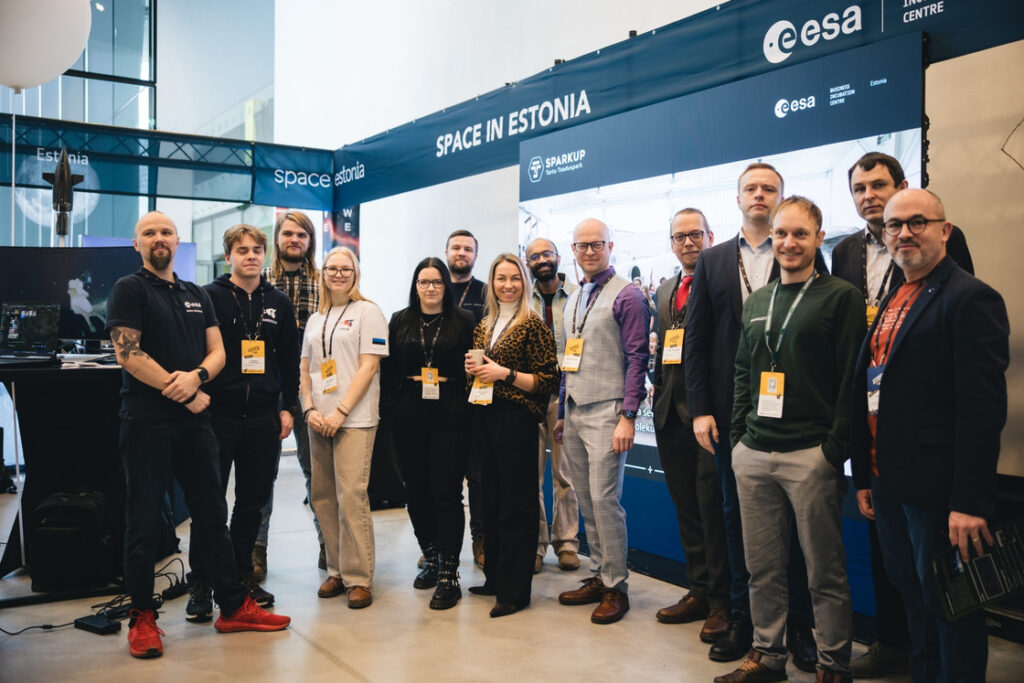
Over its nine years, ESA BIC Estonia has admitted 42 companies. Competition has been tough, with roughly one in five applicants making it into the incubator. At the same time, the high survival rate of its companies speaks to the program’s quality. The vast majority of companies that have gone through ESA BIC Estonia are still in business and growing, both in Estonia and in international markets.
The program’s impact is clearest in its results. Around €2 million in incubation support has helped companies raise more than €126 million in external funding, over €74 million of which is private investment. To date, the program’s companies have created hundreds of high-value jobs, generated tens of millions of euros in revenue and made a significant contribution to the Estonian economy and tax revenue.
Behind these results are companies that have reached international markets and proven Estonian deep tech’s competitiveness. Krattworks has become one of Estonia’s most successful drone technology companies, UP Catalyst turns carbon dioxide into advanced materials for the battery industry, and PowerUP Fuel Cells develops hydrogen-based energy solutions for future mobility. Meanwhile, Crystalspace’s technologies have made their way into international space projects, including missions linked to NASA’s Artemis program.
The profile of companies joining the incubator has also changed over the years. In the early years, the focus was mainly on satellite data applications and software solutions. Today, the program includes more developers of space hardware, satellite communications, autonomous systems, defense technology, and other deep tech solutions. This reflects a broader shift in the European space sector, where companies building real products and technologies for the global market are playing an increasingly important role.
Although the program’s name points to space, its impact reaches much further. Solutions developed in the incubator help make the energy sector, industry, logistics, environmental monitoring, and critical infrastructure more efficient. Technologies created for space are finding more and more uses in everyday life and contribute to the economy’s overall capacity for innovation.
“When we started nine years ago, space technology was still a very small field in Estonia. Today, our companies sell their products worldwide, attract major investments and take part in international space missions. What makes me happiest is that almost every company that has gone through the program is still in business,” said Sven Lilla, Head of ESA BIC Estonia.
Today, Sparkup Tartu Science Park and Tehnopol jointly run ESA BIC Estonia. The program offers startups that use or develop space technology funding, technical support and access to a pan-European innovation network.
If the biggest challenge of the first nine years was getting space technology companies started in Estonia, the goal for the next decade is to grow even more of them into technology companies with international impact. So far, the results show that innovation created in Estonia can compete at the highest global level and reach both international industrial companies and future space missions.
Look back at the program’s early days in the photo gallery from the ESA BIC Estonia opening event.
