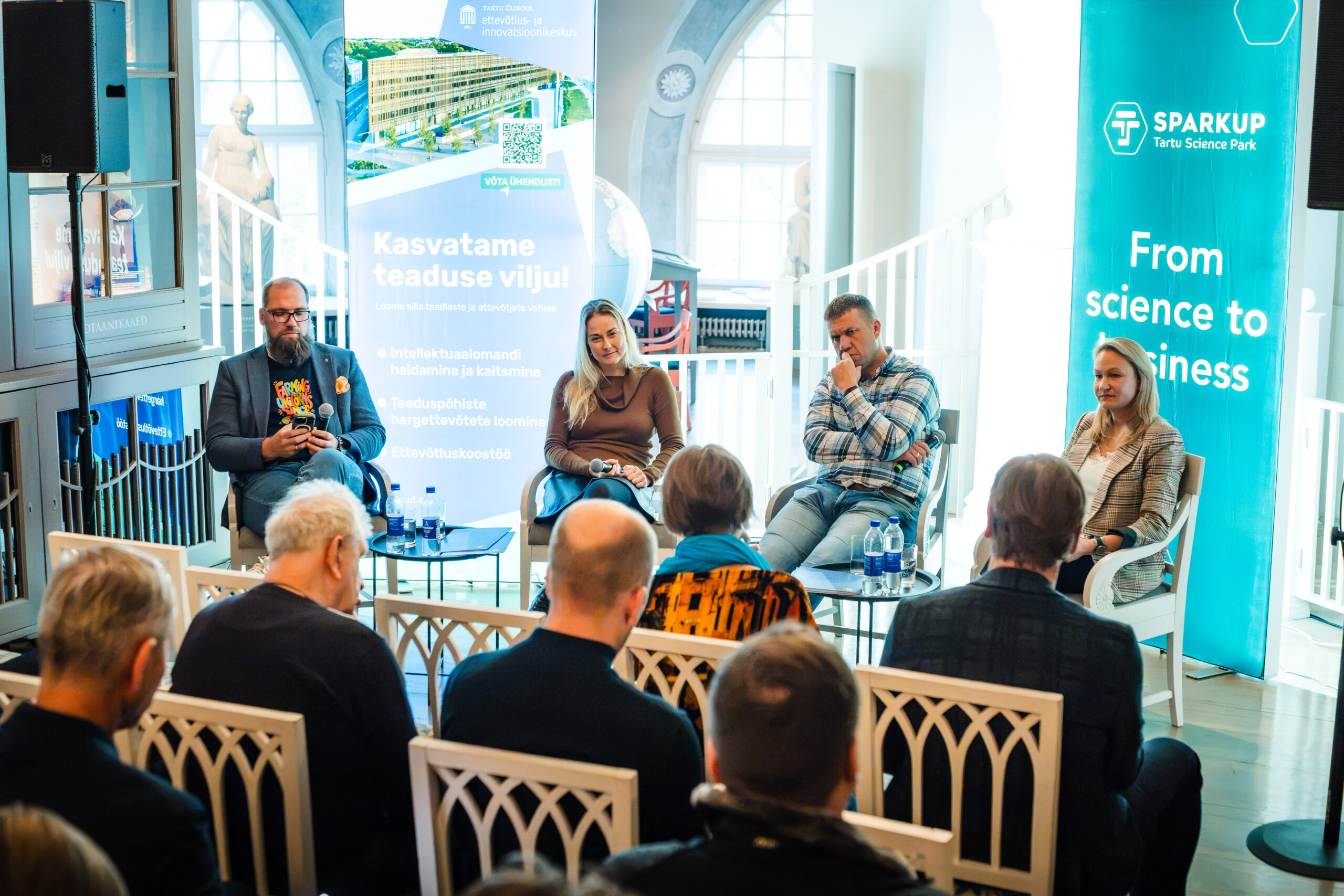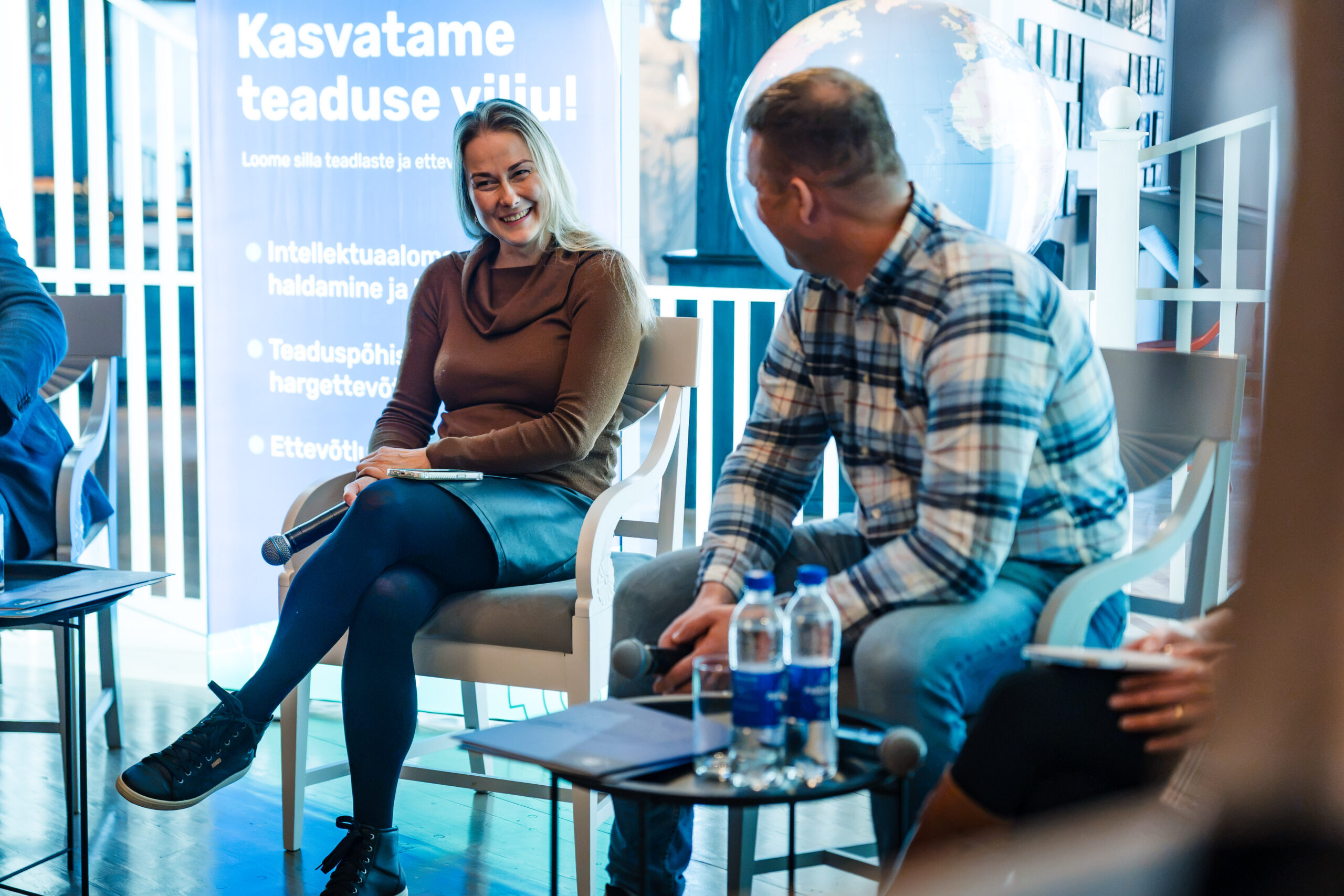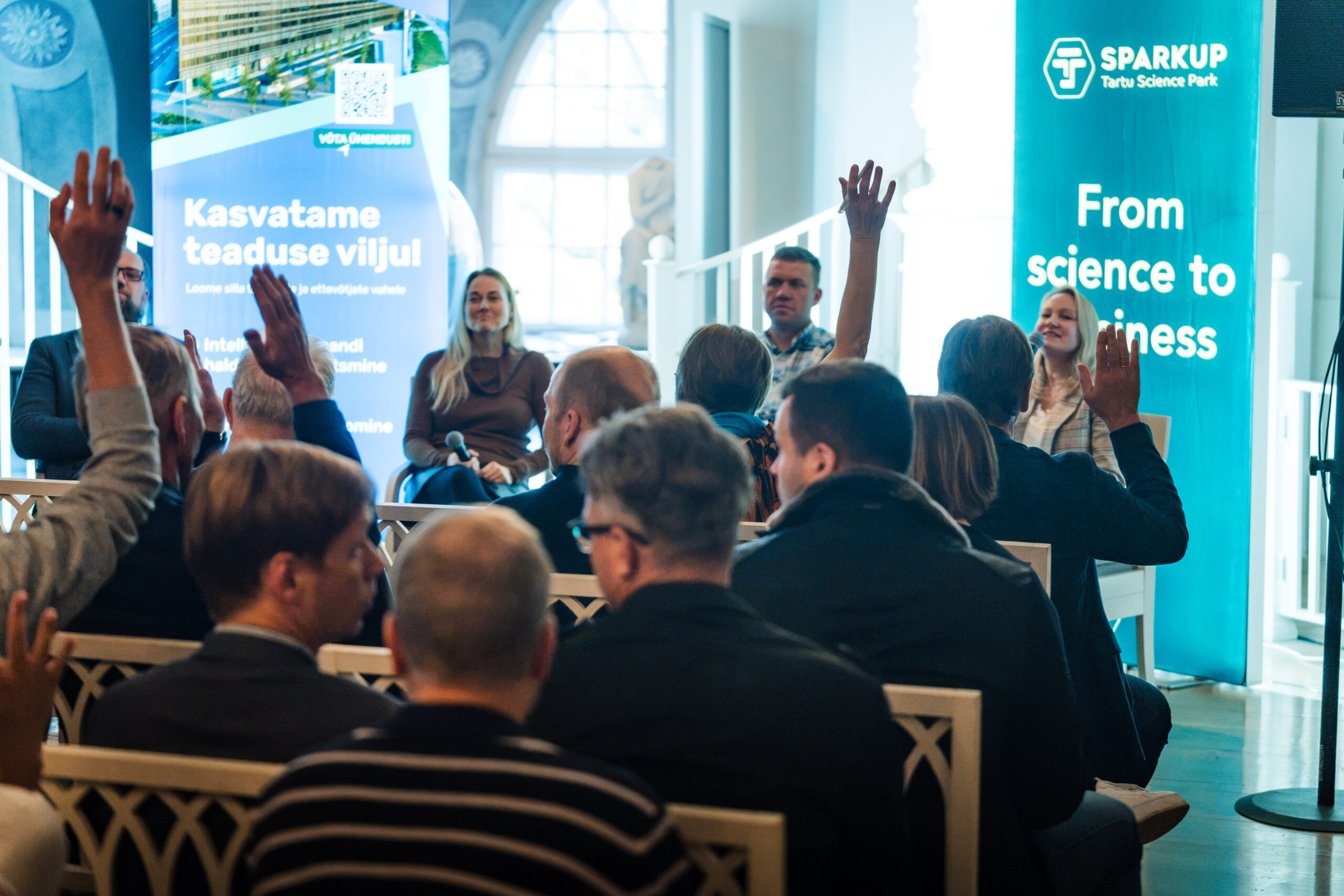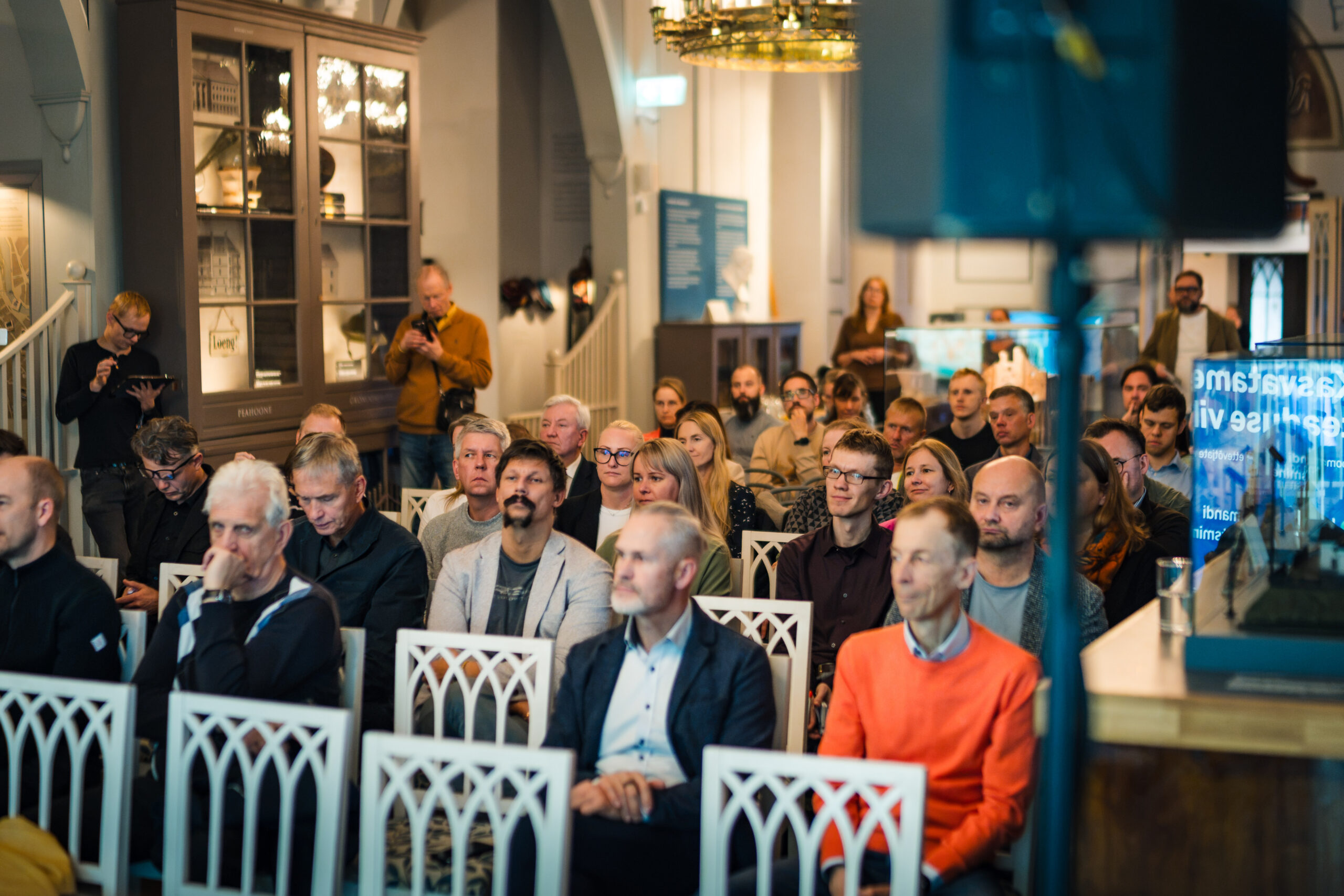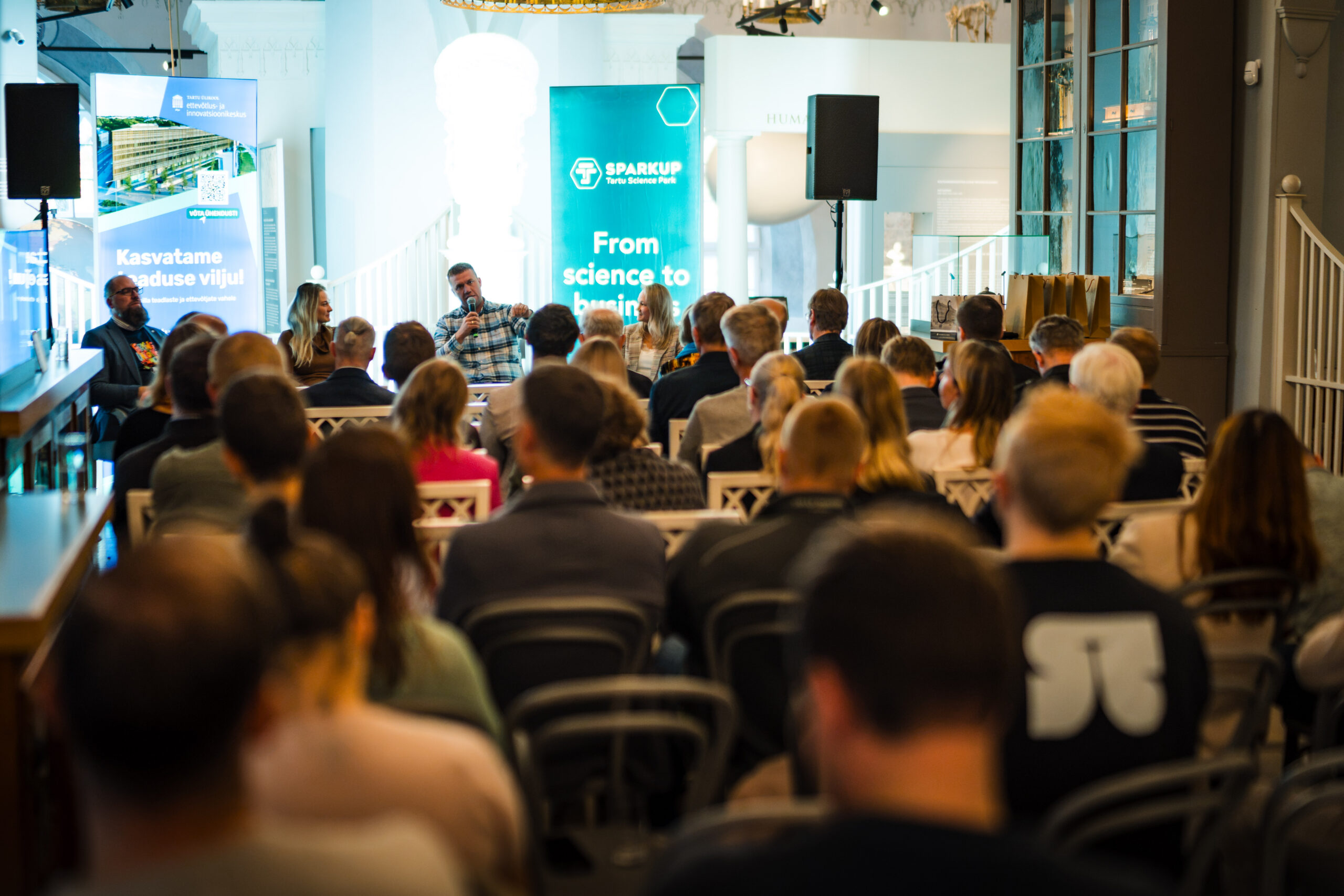
Future technologies are not born overnight, nor only in laboratories. At a panel discussion held on October 22 at the University of Tartu Museum on Toome Hill, speakers explored how research becomes a company and why that journey so often stalls halfway. The room was full, with entrepreneurs from different fields, public sector representatives and people connected to the university in one way or another.
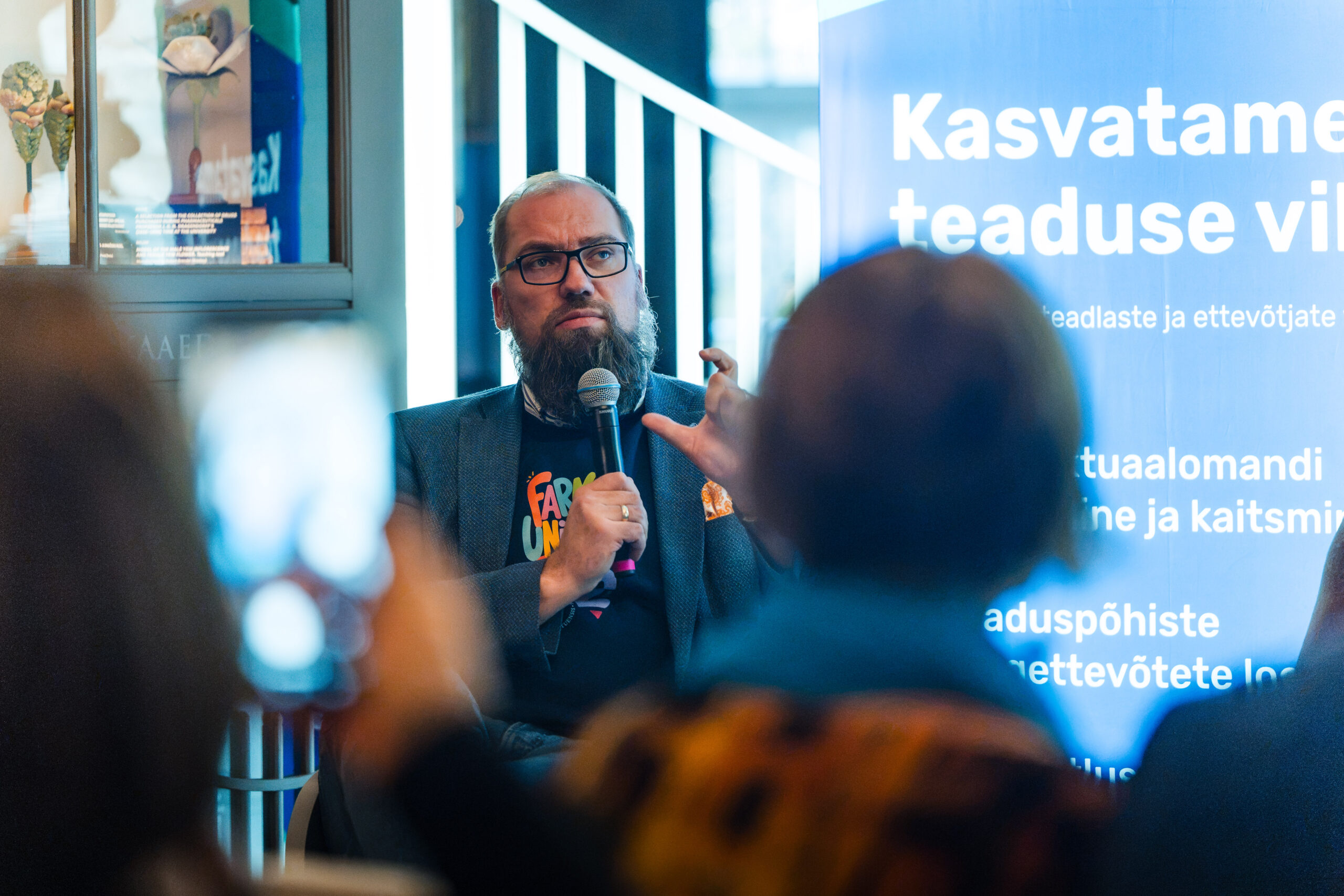
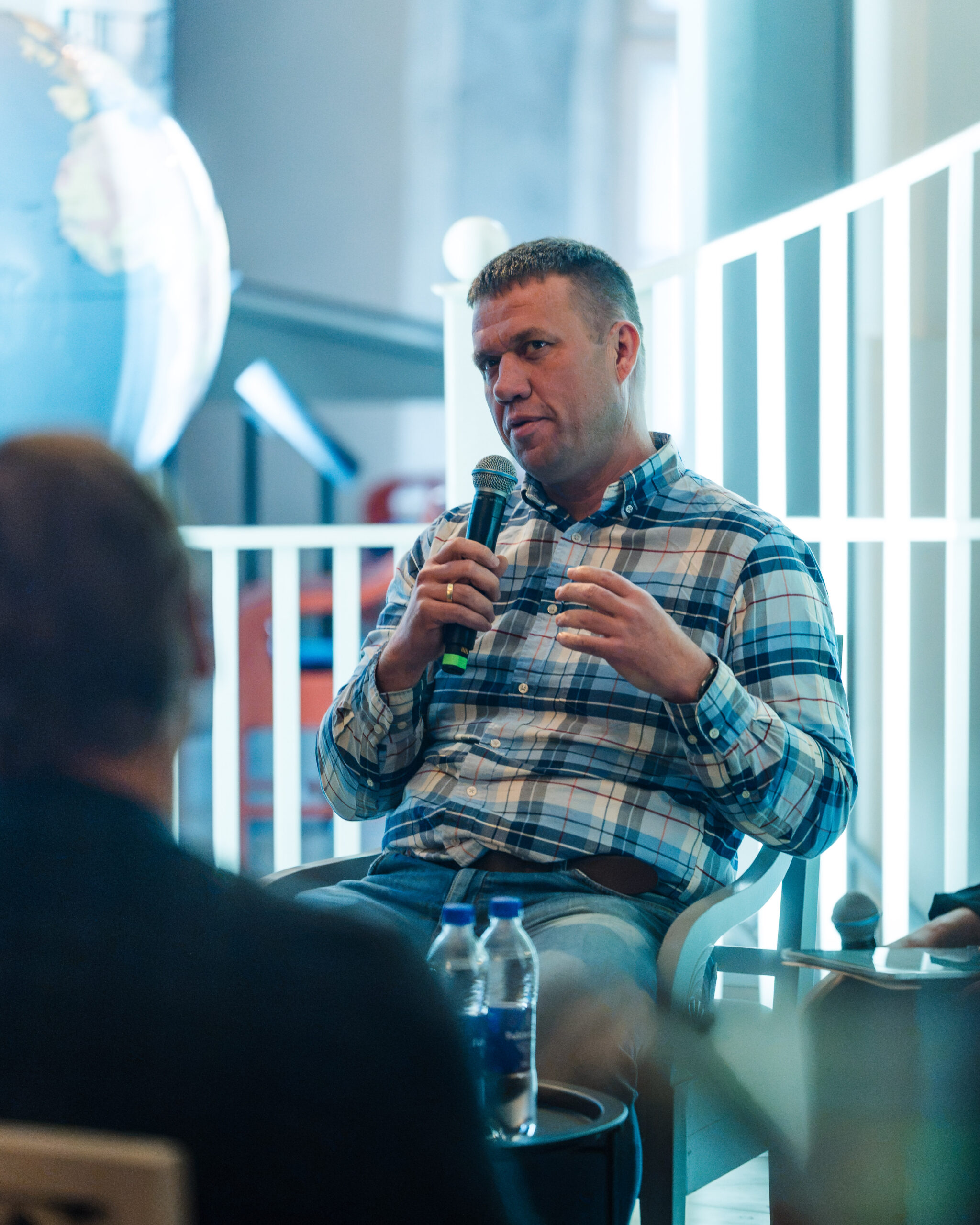
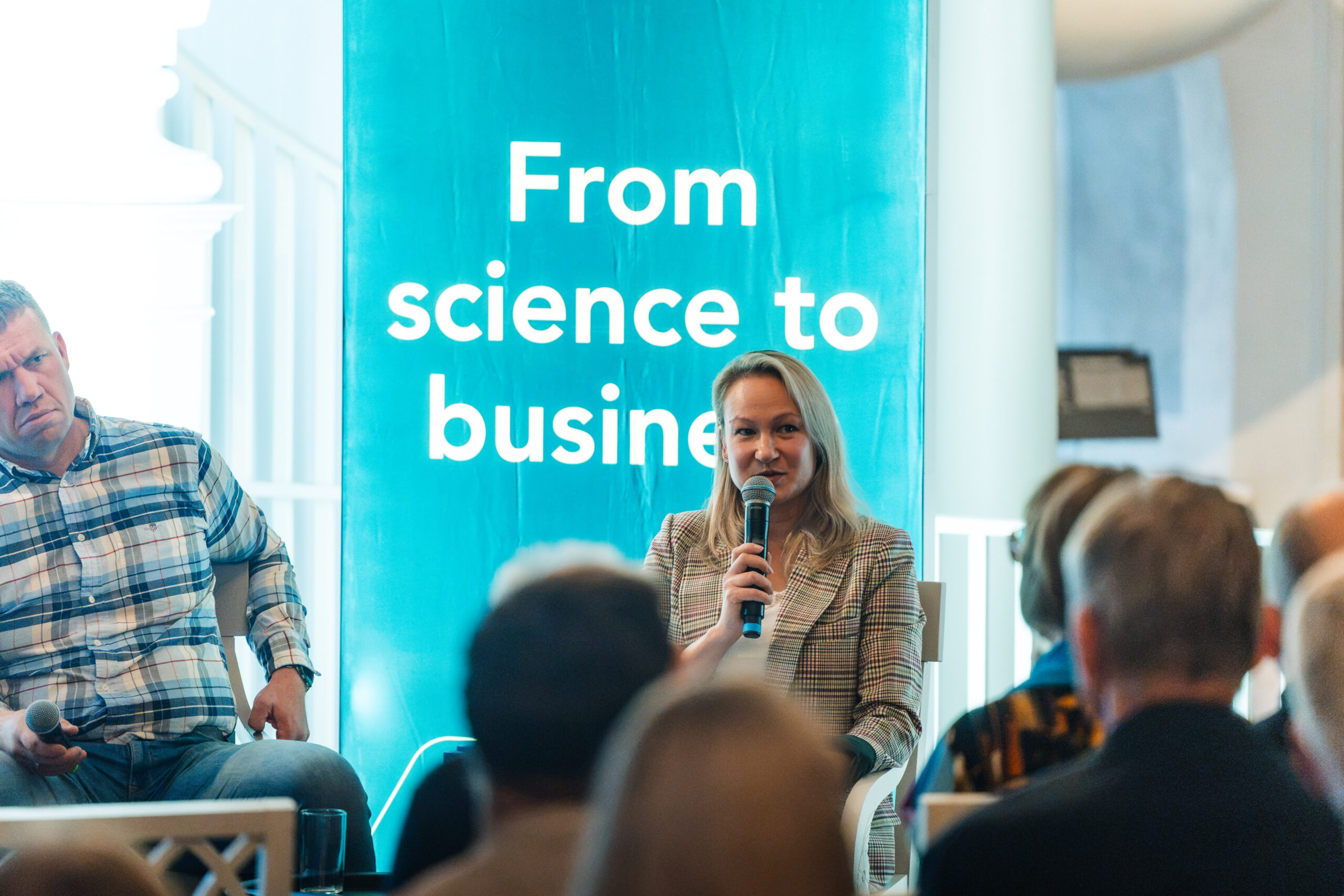
The panel featured Tõnu Esko, Vice Rector for Development and Professor at the University of Tartu, Pille-Riin Meerits, Head of Incubation Services at Sparkup Tartu Science Park, and Peeter Matson, CEO of the beekeeping company Nordmel and co-founder of HiveNavigator. Sigrid Rajalo, Deputy Secretary General for Innovation and Economic Development at the Ministry of Economic Affairs and Communications, moderated the discussion.
According to Rajalo, Estonia has a good starting point. “Estonia does world-class research,” she said. Two new unicorns have emerged in a short time, both of which are deep tech companies. As a result, Estonia still ranks first in the world in unicorns per capita. In the discussion, deep tech referred to research-based businesses with global potential.
The beekeepers who knocked on many doors
Peeter Matson described what this journey actually looks like. HiveNavigator grew out of a practical need. Matson and his former competitor, now his partner, keep around 3,000 beehives between them, and they still do the work much the same way as 170 years ago. Finding no suitable solution anywhere in the world, the beekeepers started knocking on university doors.
“A university has many doors, and we didn’t know whose door we were standing behind. At first, we didn’t really understand the scientists, and they didn’t understand us,” Matson recalled. With each meeting, the idea became clearer, and they eventually found the right partners at the University of Tartu. HiveNavigator is now part of the DeepTech Accelerator, working to translate signals from the hive into human language. Their neural network can already predict problems about eighteen days before they happen.
Looking back, Matson would not change a thing. “We got here because of those mistakes. Every one of them was necessary for the next step.”
When a solution goes looking for a problem
Tõnu Esko pointed to a pattern that repeats on both sides. Scientists often get stuck on a single discovery and start looking for a problem to fit it, without talking to customers or the market. Entrepreneurs, on the other hand, often come looking for a solution to a problem they have defined themselves, even though the real bottleneck may lie elsewhere. In Esko’s view, solutions should be sought together, and this requires places where the two sides can meet. For example, he mentioned the ADAPTER network, where a company can describe its problem and have it reach all Estonian universities.
Pille-Riin Meerits confirmed that she sees the same pattern in the accelerator. “Scientists find it really uncomfortable to step out of the lab and talk to people they don’t know, who may give them uncomfortable feedback,” she said. But once teams are sent out to talk to customers, the idea often changes and fits market needs better.
A scientist doesn’t have to become a businessperson
Another challenge, according to Meerits, is that scientists split their time between research and business, leaving the idea without a clear driver. “You can’t build a company by working on it only when you’re not at a conference,” she noted. A co-founder with business experience can be the answer. The deep tech program has organized two online matchmaking events where startup founders can look for co-founders. The first drew around 50 participants, the second more than 80, and it is about to produce its first co-founder match for a team from the Estonian University of Life Sciences. The plan is to hold these meetups twice a year.
According to Esko, a scientist founder should often remain the head of research, with a professional entrepreneur at their side. Ideally, the scientist continues working at the university, holds equity in the company, and leads the science. The University of Tartu has a network of entrepreneurship agents whose goal is to map researchers’ ideas. Researchers can also take an industry knowledge transfer leave of up to three years, working temporarily in a company while keeping their academic position at the university. Esko also floated the idea of a venture studio at the university, where experienced entrepreneurs would take researchers’ ideas forward.
Trust is built on the factory floor
Matson’s suggestion that scientists spend a few months working inside companies sparked a lively discussion. Drawing on his experience in the wood industry, he described how they tried, as far as possible, to have every new employee rotate through all production positions during their first three months. “When you spend three months with those people, you see the pain points with your own eyes. If I were a scientist, I’d come up with a lot of smart ideas there.”
An audience member added that everything of value is built on trust, and that this is how the trust gap between entrepreneurs and scientists can be bridged. Listeners also raised the question of research funding. Esko pointed out that basic research is essential, but the Ministry of Education and Research and the Ministry of Economic Affairs and Communications both offer several measures specifically for cooperation between scientists and companies. Rajalo added: “The world hasn’t run out of funding. The question is how to find the people who truly want to build knowledge-intensive businesses.”
The direction is right, but the road is long
According to Rajalo, the trends are positive. Companies’ investment in research and development is growing, and the private sector leads R&D investment in Estonia. The value added of companies that took part in the Applied Research Program is more than 120% of the EU average, compared with about 58% in the manufacturing industry.
Esko reminded the audience that deep tech companies grow slowly. “We are in a better place than ever before, but far from ideal.”
The key takeaway was that Estonia has both world-class research and entrepreneurial people, but a gap between these two worlds still needs to be deliberately narrowed. All the panelists reached the same conclusion, but through different routes. Future technologies are not born only in the lab or only in a company. They are born when scientists and entrepreneurs begin to understand each other, look for solutions together and are willing to take wrong turns along the way.
HiveNavigator’s story showed that this kind of cooperation can begin with a single bold knock on a university door. But it only becomes a company when both sides invest time, patience, and trust. The scientist doesn’t have to become a businessperson, and the entrepreneur doesn’t have to become a scientist. What matters is that the idea is backed by a team where each side can do what it does best. Estonia is in a better position than ever to develop research-based entrepreneurship, but the next step depends on how boldly scientists and entrepreneurs move toward each other.
Do you have a research-based idea that could become a company? Applications for the next round of the DeepTech Accelerator are open until November 8. Learn more about the DeepTech Accelerator.
Does your company face a challenge that requires help from scientists? Contact the University of Tartu Center for Entrepreneurship and Innovation or submit a request to the ADAPTER network.
Sparkup Tartu Science Park and the University of Tartu organized the panel discussion as part of the Estonian DeepTech Startup Network. The network brings together two science parks and three universities, and its goal is to help research-based ideas grow into companies.